
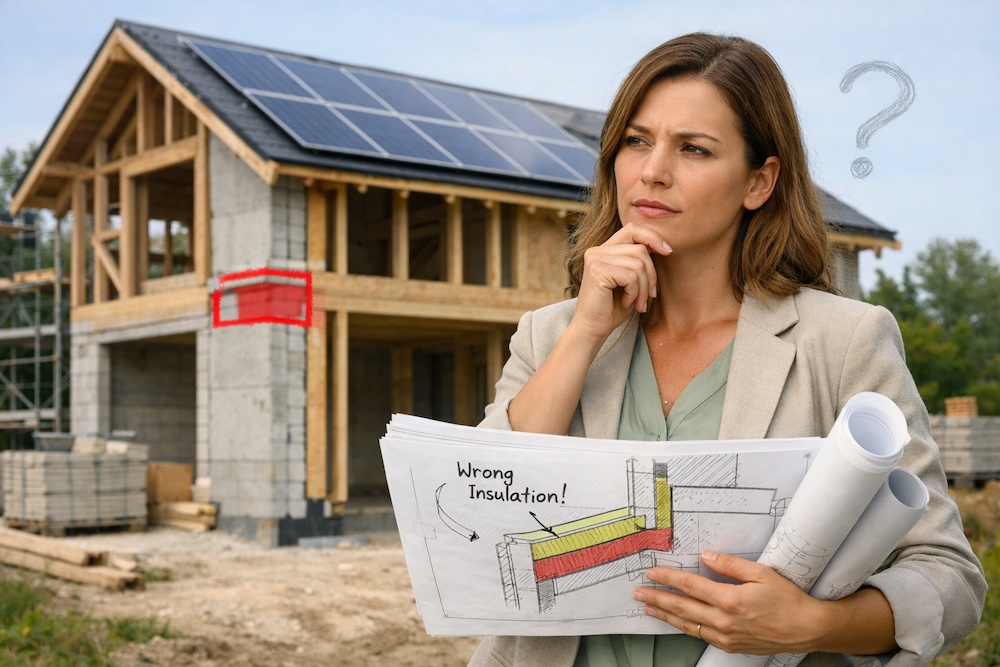
Building a low-energy or nearly zero-energy house is more challenging than traditional construction. It requires a holistic approach considering architecture, materials, and building systems. Mistakes can reduce efficiency, increase energy use, and lead to higher costs.
1. Ignoring House Orientation and Site
One of the most basic mistakes in low-energy construction is poor building orientation relative to the sun. Optimal orientation (more windows on the south side) maximizes winter solar gains and reduces heating needs. Failing to consider this can significantly increase heating costs and reduce efficiency.
Tip: Plan your house so most living spaces face south, considering shading from nearby structures and summer sun angles.
2. Poor or Inadequate Insulation
A low-energy house requires high-quality thermal insulation and near-perfect airtightness. Thermal bridges (interruptions in insulation, continuous walls, or junctions) can cause large heat losses, increasing energy consumption.
Mistake: Underestimating insulation under foundations, around windows, or at ceilings can undermine the effectiveness of the entire building envelope.
3. Improper Integration of Heating and Cooling Systems
Even advanced systems like iSunBuilding (using solar and geothermal energy) won’t perform optimally if not properly integrated into the overall project. Correct sizing, soil assessment, and compatibility with other systems (e.g., heat recovery, waterproofing) are essential.
Mistake: Ignoring soil requirements or incorrect installation of pipes/exchangers can reduce system efficiency or cause uneven heating/cooling.
4. Choosing the Wrong Materials or Poor Windows
Significant energy loss can occur through low-quality glazing, poorly insulated materials, or leaky joints. Windows and doors that are not well insulated often account for the biggest heat losses.
Mistake: Investing in cheap materials upfront can lead to higher long-term costs due to lower efficiency and more frequent maintenance.
5. Poorly Designed Ventilation
Increasing airtightness without proper ventilation (e.g., heat recovery ventilation systems) can lead to poor indoor air quality, condensation, and mold, while energy circulation is not optimal.
Mistake: Over-focusing on airtightness without ensuring proper airflow reduces comfort and can cause structural issues over time.
Conclusion
Successful low-energy house construction requires a balanced approach between architecture, materials, and systems. Mistakes in any of these five areas can drastically reduce energy efficiency and increase operating costs. Proper planning, high-quality materials, and integration of advanced systems are key to a sustainable and efficient low-energy home.